
New 2026
Z650 S


Colours
Editions of Z650 S


- Features
- Technologies
- Specifications






Wide and Aggressive Styling
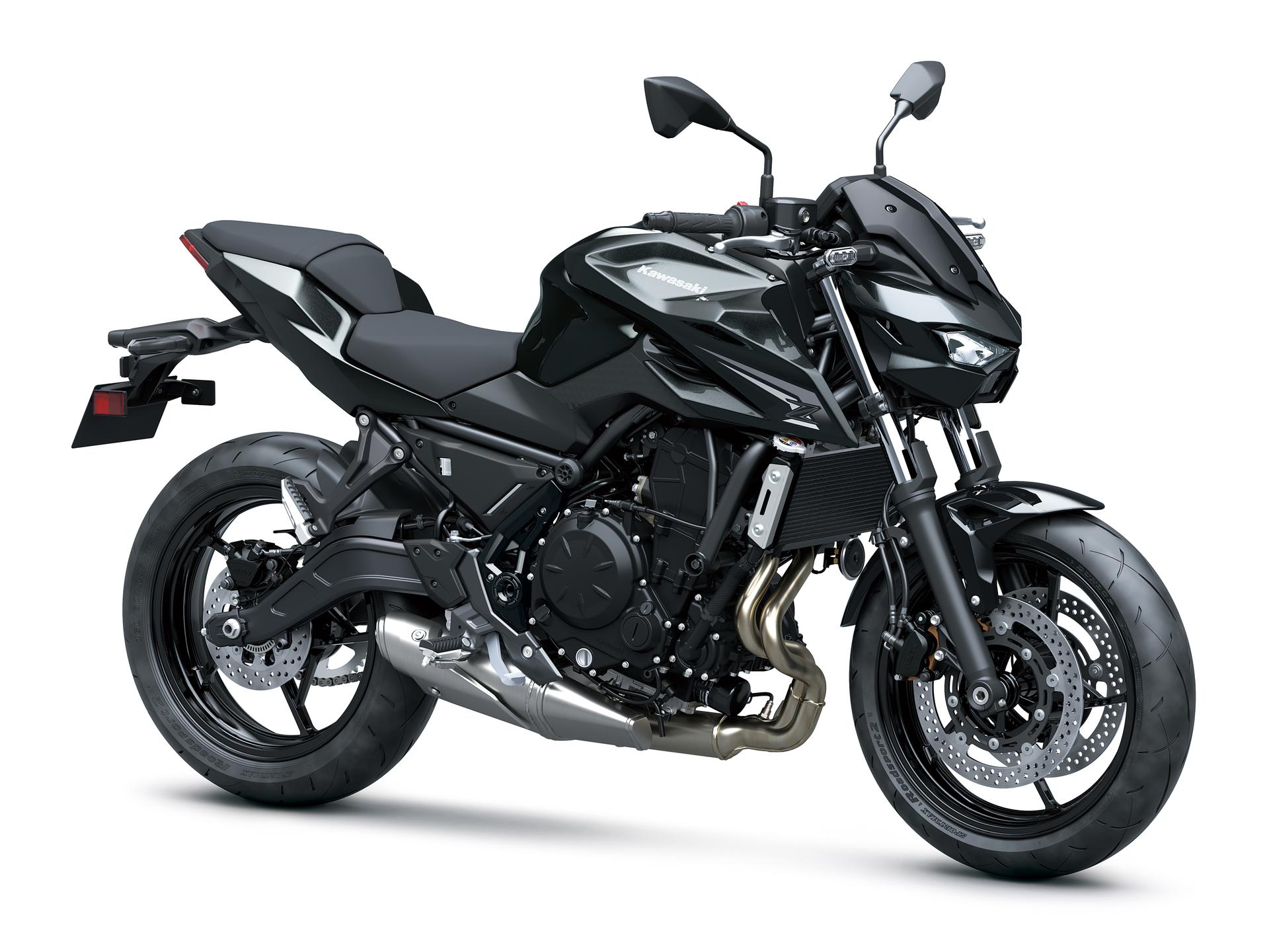
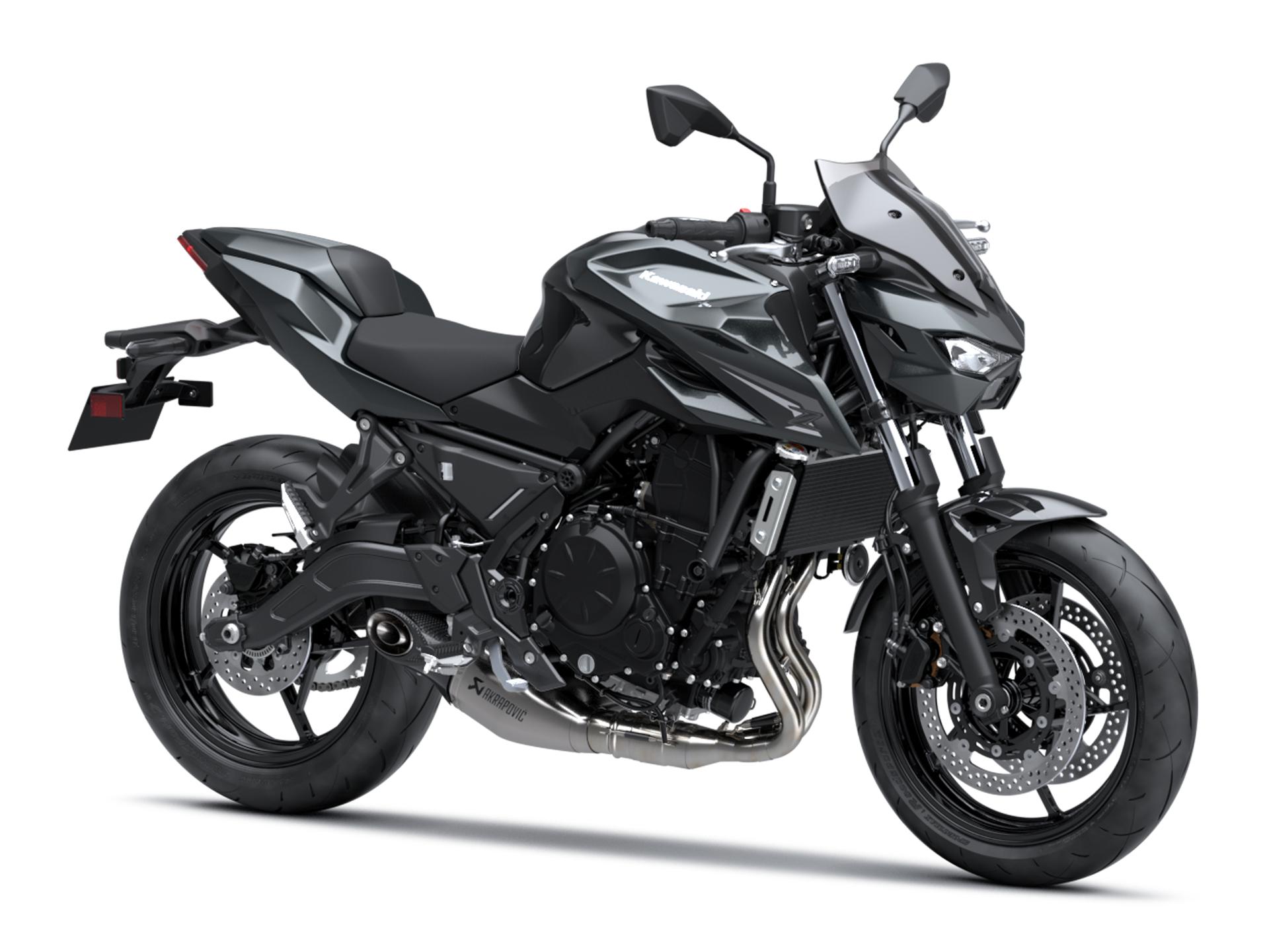
Retaining its compact chassis, nimble nature, and sporty riding position, the new Z650 S now features sugomi styling with bodywork that makes it appear wider and more aggressive, appealing to riders who want to be seen on an impressive-looking bike, but one that also has a rider-friendly character.
Latest Technology
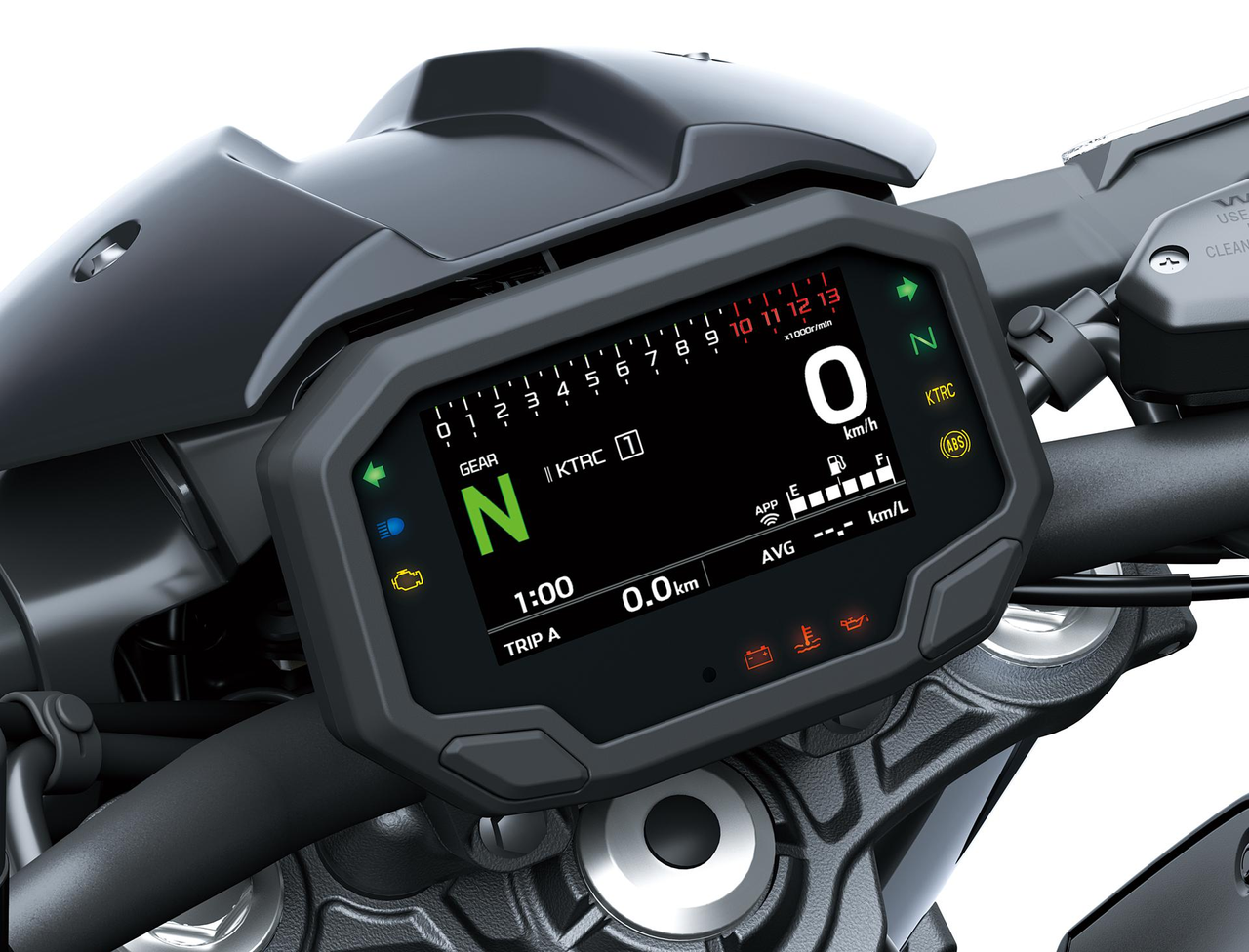
The new Z650 S offers advanced Kawasaki technology, including traction control, KQS as an accessory for fun, engaging gear shifting, digital TFT instrumentation to provide information at a glance, and smartphone connectivity to help keep the rider well informed, all of which contribute to making motorcycling life more enjoyable.
Lightweight And Capable
The new model Z650 S retains its signature light weight and nimble handling despite its wider and more aggressive looks. Riders will find it straightforward to handle and more experienced riders will appreciate how flickable and manoeuvrable it is, especially in the city.
Muscular New Looks
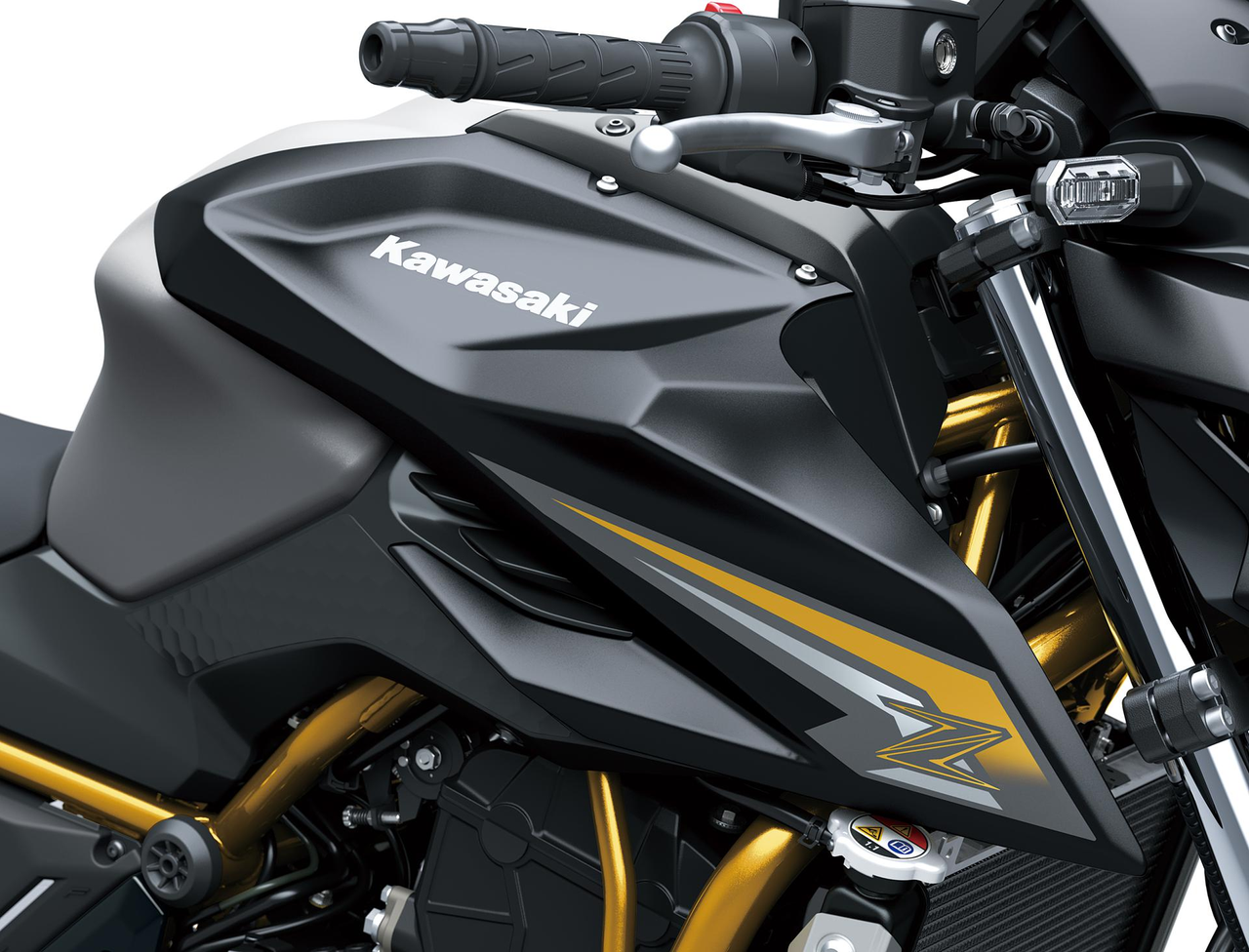
Not only will onlookers crane their necks to stare at the Z650 S, but riders themselves will be impressed as they sit on the bike, with the wide, muscular-looking shrouds entering their field of vision. Shared Z design elements like metallic accents around the machine add to a high-quality look, while LED lights front and rear reflect the bike’s sporty performance.
Part of the Z Family
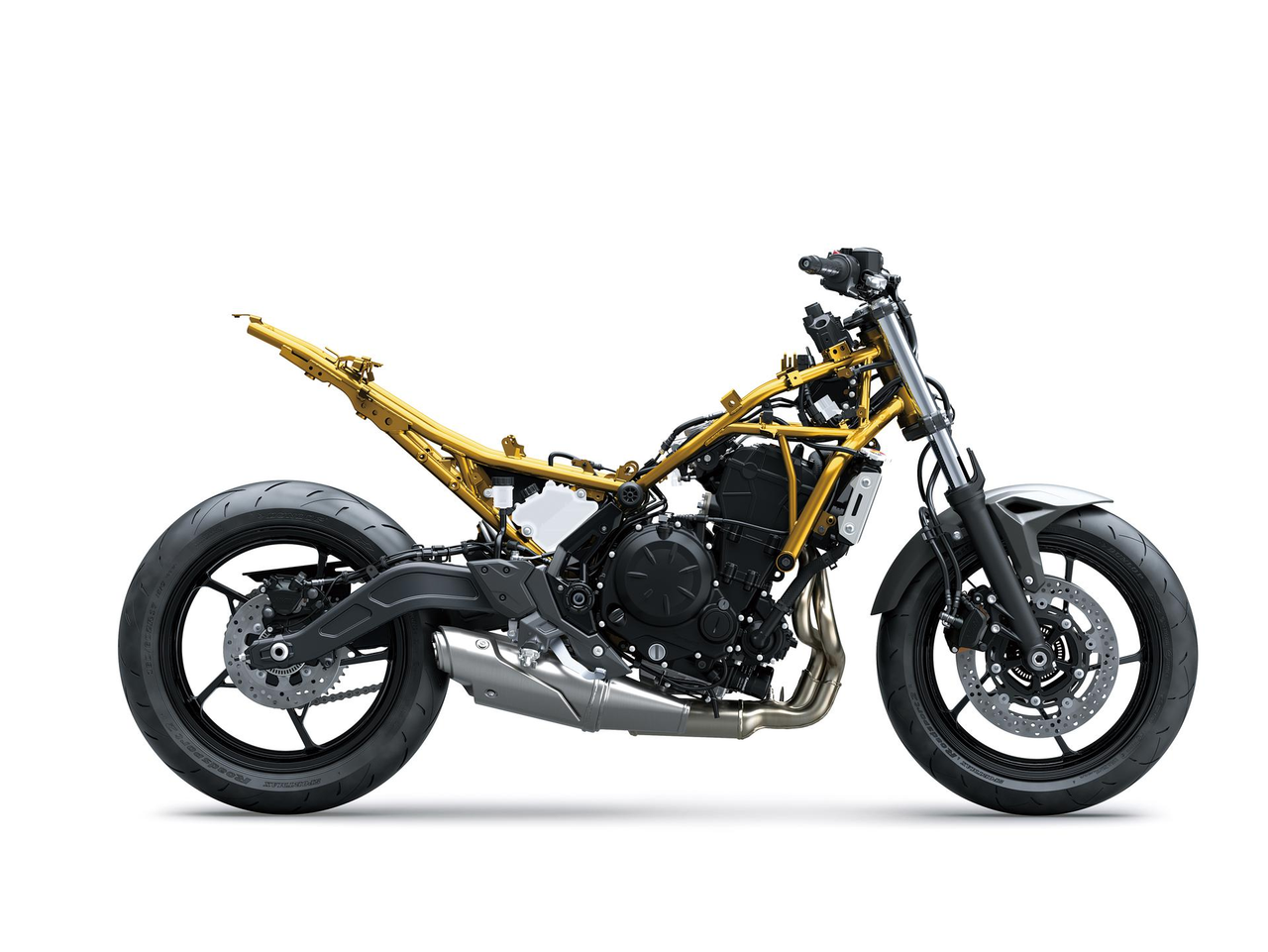
Z machines are identifiable by their sugomi style and performance, and the new Z650 S is no exception. The Z650 S shares an unmistakable silhouette with time-honored Z proportions (crouching stance, low positioned head and upswept tail) that are hallmarks of the entire Z Supernaked family. Small touches like an aluminium radiator cover and aggressive-looking modern headlights, both shared with other models in the Z family, make it clear that this is a Z model.
Horizontal Back-Link Rear Suspension
This modern suspension arrangement—also featured on Kawasaki supersport and other Supernaked models— delivers a balance of sporty performance and ride comfort, producing predictable handling for an exciting and enjoyable ride.
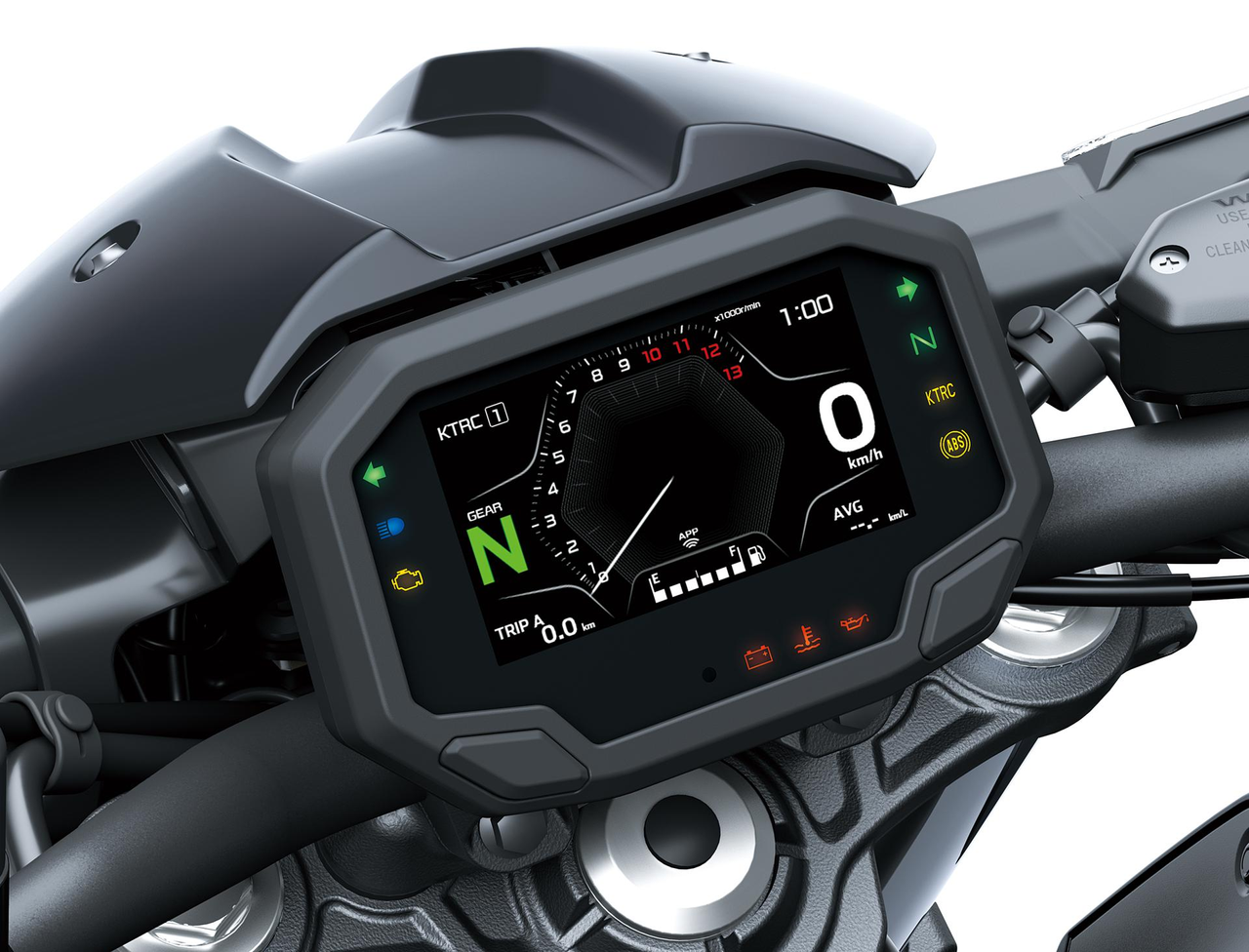
Kawasaki TRaction Control (KTRC)
Kawasaki TRaction Control (KTRC) acts to prevent rear wheel slippage, letting riders enjoy the Z650 S on the street with added reassurance.
KQS as an Accessory
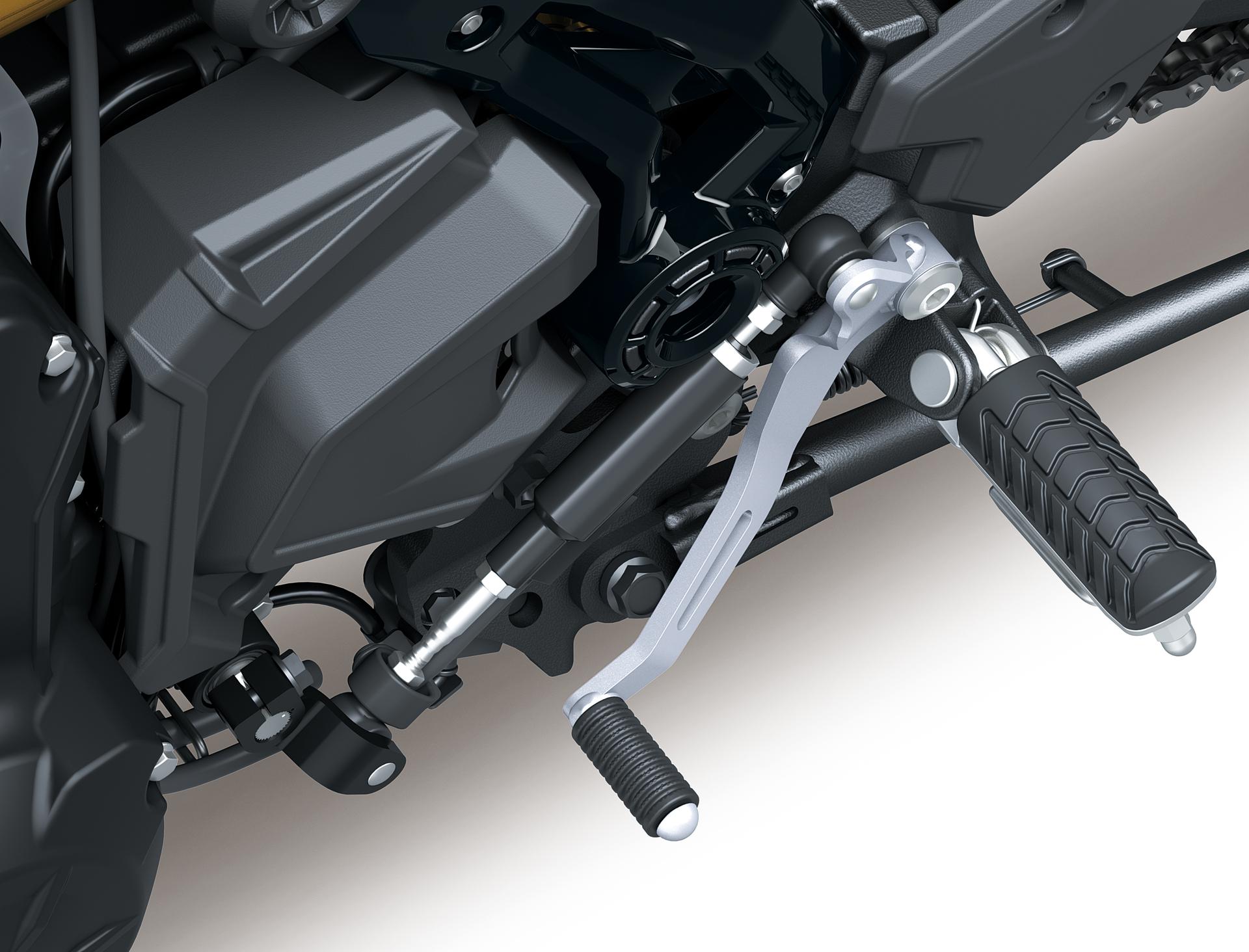
For riders looking for even more riding excitement, the Kawasaki Quick Shifter (KQS) is available as a Kawasaki Genuine Accessory. It lets riders shift up through the gears smoothly and quickly, adding fun to every ride.
Exciting Parallel Twin Engine
The 649 cm3 Parallel Twin engine delivers a throttle response with a powerful feeling and a quick-revving character. To optimise performance for everyday riding, care was taken to maximise low-mid range torque. This offers both a high level of control when making minute throttle adjustments and a gratifying rush of acceleration in the lower rpm ranges.
4.3” TFT Instrumentation
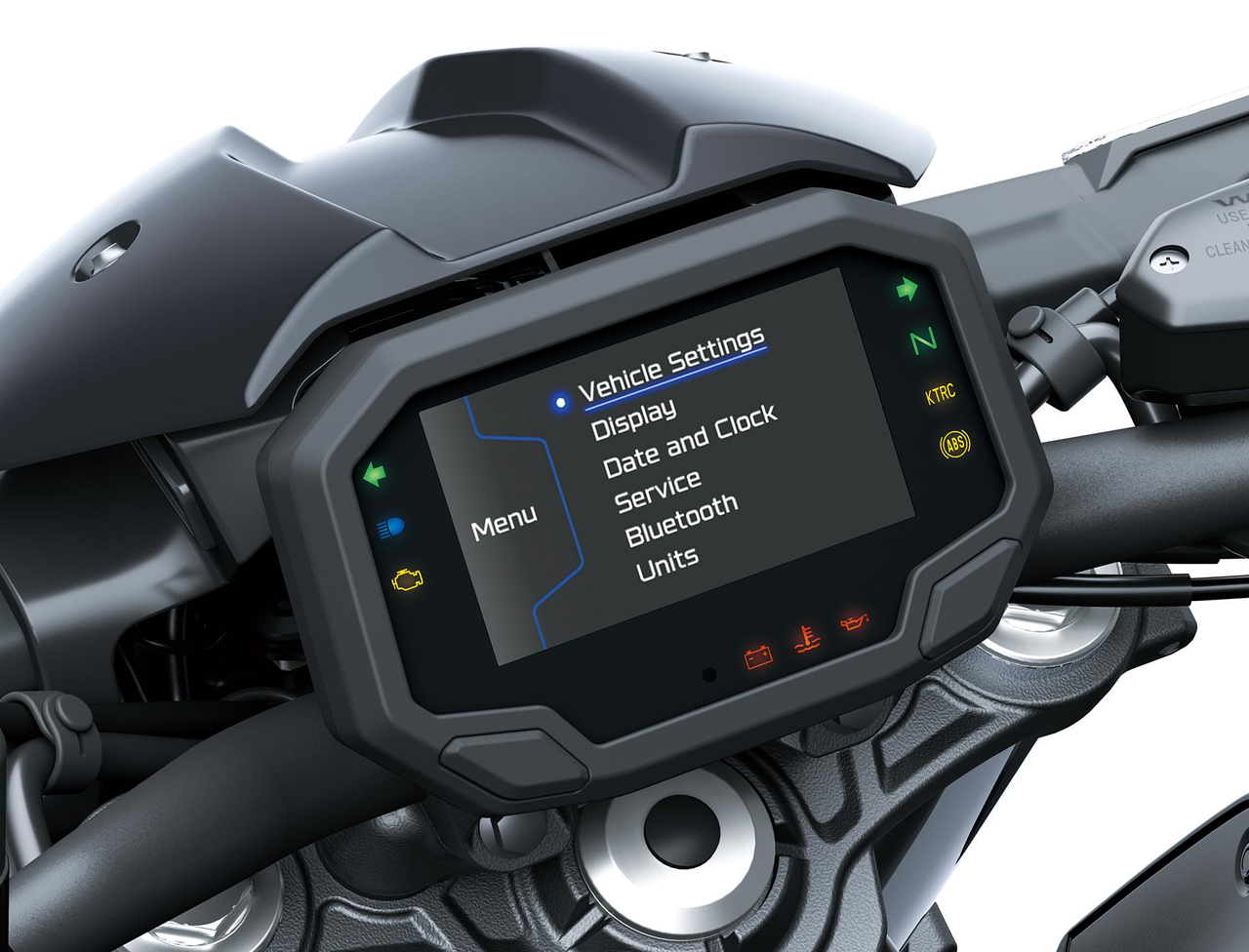
4.3” all-digital TFT colour instrumentation with a new display layout gives the cockpit a high-tech, high-grade appearance.
Smartphone Connectivity
The ability for riders to connect their smartphone with the Z650 S adds fun and convenience to every ride, as riders can use RIDEOLOGY THE APP MOTORCYCLE to access a wide range of functions, from vehicle information to riding logs and more.
Highly Manoeuvrable
The Z650 S’s light weight and manageable seat height both contribute to manoeuvrability, whether walking beside the bike, or foot paddling in a parking lot. The smooth engine response and strong low-end torque further facilitate low-speed manoeuvring. This is reassuring for a wide range of riders.
Riding Position Spurring the Rider On
Riders can make the street their playground with a wider, more forward-leaning riding position, produced by a handlebar located further forward than the current model’s, combined with a seat with an optimised seat height.
Light Weight, Nimble Handling
Benefitting from a chassis comprised of lightweight components, the Z650 S was designed using Kawasaki’s in-house analysis technology, resulting in a lightweight trellis frame and swingarm that are key to its ultra-light handling. This contributes to an enjoyable ride quality and suits the bike well to a wide range of riders.







Smartphone Connectivity
Smartphone connectivity contributes to an enhanced motorcycling experience by enabling riders to connect to their motorcycle wirelessly.
Horizontal Back-link Rear Suspension
Horizontal Back-link Rear Suspension arranges its shock unit horizontally, greatly contributing to efficient use of space and mass centralisation.
Dual Throttle Valves
Dual Throttle Valves offer increased power and greater ease of use care of a second set of ECU-controlled throttle valves.
Assist & Slipper Clutch
Based on racing technology, the Assist & Slipper Clutch acts as both a back-torque limiter and a self-servo mechanism that enables a lighter clutch lever pull.
Economical Riding Indicator
The Economical Riding Indicator is a mark appearing on the instrument panel to indicate favourable fuel consumption, encouraging fuel efficient riding.
ABS
ABS (Anti-lock Brake System) ensures stable braking performance by preventing wheel lock during braking.
Engine
| Engine type | Liquid-cooled, 4-stroke, parallel twin |
|---|---|
| Compression ratio | 10.8:1 |
| Valve system | DOHC, 8 valves |
| Bore x stroke | 83.0 x 60.0 mm |
| Displacement | 649 cm³ |
| Fuel system | Fuel injection: 36 mm x 2 |
| Lubrication | Forced lubrication, semi‑dry sump |
| Starting System | Electric |
| Ignition System | Digital |
Performance & Transmission
| Maximum power | 50.2 kW {68 PS} / 8,000 rpm |
|---|---|
| Maximum torque | 64.0 N•m {6.5 kgf•m} / 6,700 rpm |
| Transmission | 6-speed, return shift |
| Clutch | Wet, multi disc |
| Primary Reduction Ratio | 2.095 (88/42) |
| Gear Ratios 1st | 2.438 (39/16) |
| Gear Ratios 2nd | 1.714 (36/21) |
| Gear Ratios 3rd | 1.333 (32/24) |
| Gear Ratios 4th | 1.111 (30/27) |
| Gear Ratios 5th | 0.966 (28/29) |
| Gear Ratios 6th | 0.852 (23/27) |
| Final drive | Chain |
| Final reduction ratio | 3.067 (46/15) |
Frame & Dimensions
| Frame type | Trellis, high-tensile steel |
|---|---|
| Rake | 24.0 ° |
| Trail | 100 mm |
| Wheel travel front | 125 mm |
| Wheel travel rear | 130 mm |
| Tyre, front | 120/70 ZR17 M/C (58W) |
| Tyre, rear | 160/60 ZR17 M/C (69W) |
| L x W x H | 2,055 x 805 x 1,080 mm |
| Steering angle L/R | 35° / 35° |
| Wheelbase | 1,410 mm |
| Ground clearance | 130 mm |
| Fuel capacity | 15.0 liter |
| Seat height | 805 mm |
| Curb mass* | 190 kg |
| | *Curb mass includes all necessary materials and fluids to operate correctly, full tank of fuel (more than 90 percent capacity) and tool kit (if supplied). |
| Estimated dry weight** | 171 kg |
| | **Estimated Dry weight does not include all necessary materials and fluids to operate correctly, full tank of fuel (more than 90 percent capacity) and tool kit (if supplied). |
Brakes & Suspension
| Brakes, front | Dual semi-floating discs |
|---|---|
| Front Brake Diameter | Ø 300 mm |
| Front brake caliper type | Dual-piston |
| Brakes, rear | Single disc |
| Rear Brake Diameter | Ø 220 mm |
| Rear brake caliper type | Single-piston |
| Suspension, front | Telescopic fork |
| Front suspension diameter | Ø 41 mm |
| Suspension, rear | Horizontal Back-link with spring preload adjustability |
Accessories

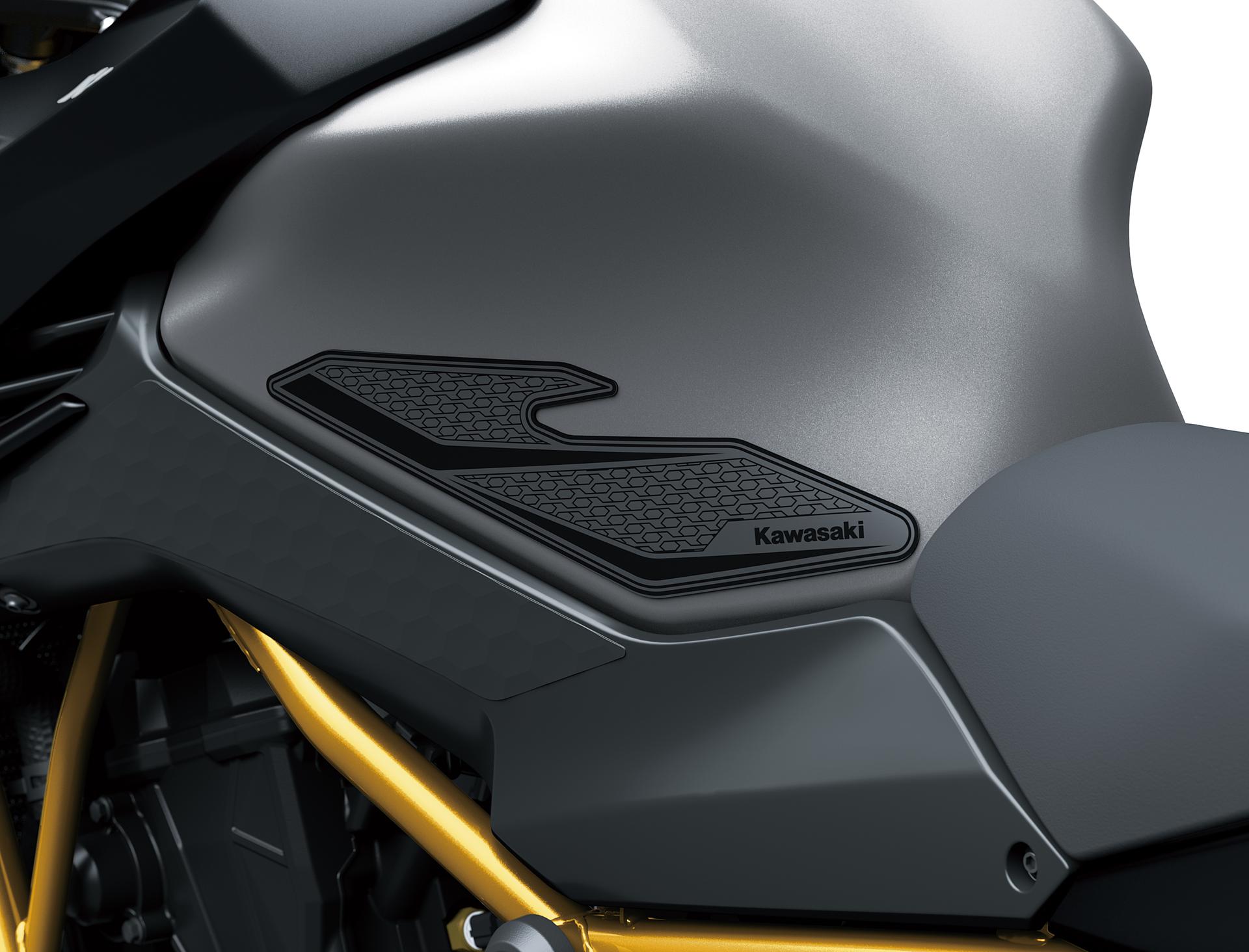
Knee Pads
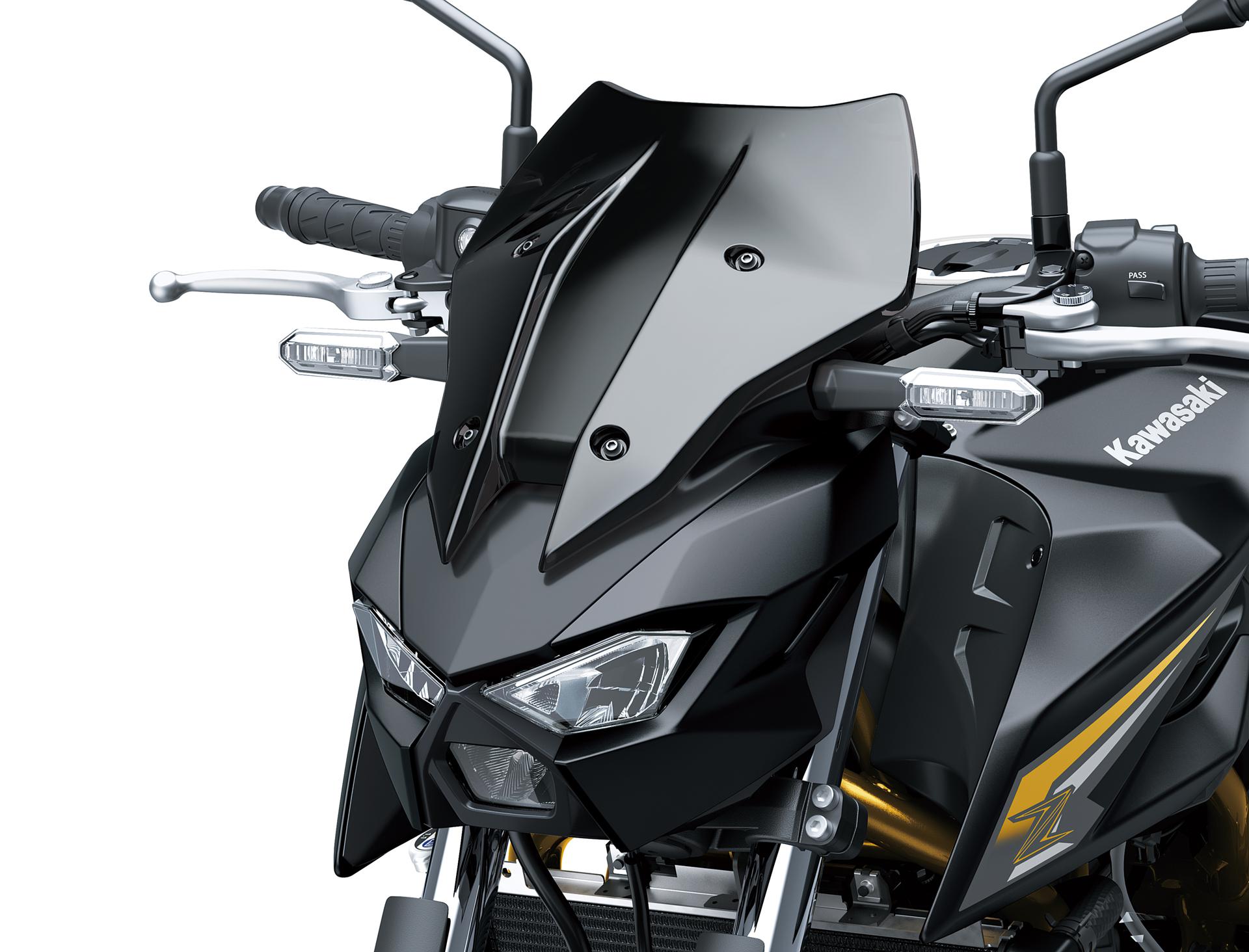
Help protect your tank’s paint finish from scratches and ordinary wear and tear with this Knee Pad Set.

Akrapovič Titanium Full System (Euro 5+)
Akrapovič full exhaust system with catalyst and titanium muffler. This system is around 2kg lighter compared to the stock exhaust system and gives a pure sporty sound. A combination of racing materials like titanium for the muffler outer sleeve and carbon fibre end cap give this exhaust system a racing touch. Laser marked logo. This homologated exhaust system is compliant with EU regulations and has EC/ECE type-approval. (Homologated for Euro-5+ bikes with front and rear oxygen sensor). Suitable for Model Years form on 2024.
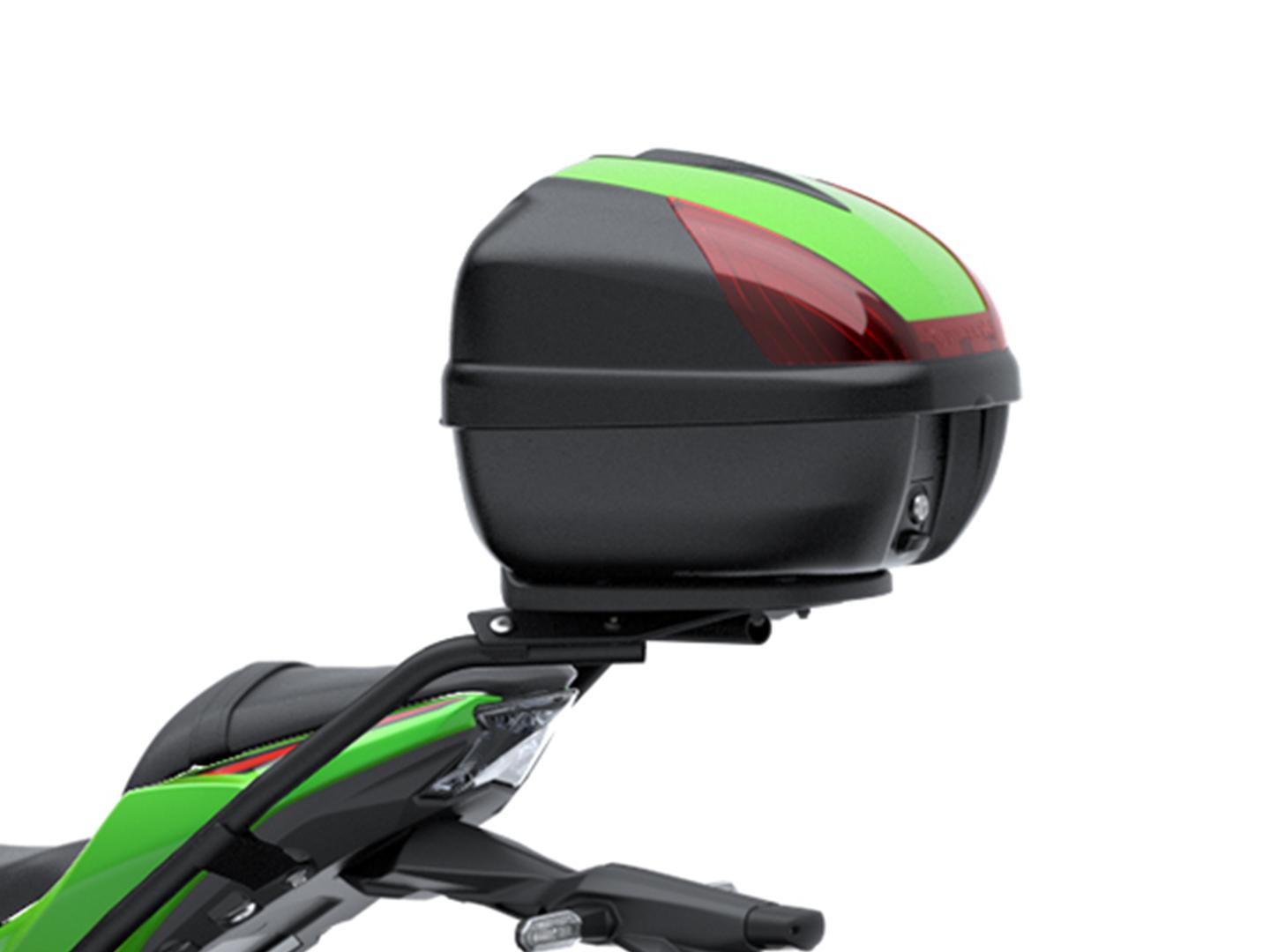
Top Case Kit (30L)
Ninja 650 / Z650 Top Case Kit
Durable ABS Construction 30 Liter Top Case.
Offers enhanced carrying capacity, while maintaining the bike’s slim figure to facilitate navigating city traffic.
Rigid, steel bracket with black powder-coating. Top Case cover to match motorcycle colour. Top Case has it's own lock and key. Baseplate is included.
Partnumbers required:
- Bracket for Top Case -999940799
- Topcase (30L) Incl. Baseplate and Lock - 999940937
- Top Case (30L) Cover - Consult your dealer for colour options

L-forks for Premium Rear Bike Stand
An essential tool for motorcycle enthusiasts and mechanics alike. Designed to provide stability and convenience, this paddock stand allows easy access to the wheels, suspension, and other components.
This premium rear bike stand can be disassembled, making transportation a lot easier. The compact bike stand comes in a shop worthy carrying case with a built-in carrying handle. The stand is made of premium steel and has a green and black finish. The Kawasaki logo is laser cut in steel.
Optional are the forks to suit your preference;
- The Y-forks are to be used in combination with bobbins. (163JAY0021)
- The L-forks can be used to support the rear swing arms. (163JAY0022)

Top Case (30L) Incl. Baseplate.
The Top Case (30 L) offers enhanced carrying capacity, while maintaining the bike’s slim figure to facilitate navigating city traffic.
Rigid, steel bracket with black powder-coating. Top Case Cover to match motorcycle colour.
Top Case has it's own lock and key. Baseplate is included.
- Top Case can not be used in combination with panniers/saddlebags
- 3.0 kg max
- Top Case Bracket and Cover are not included


Semi Soft Panniers (2 x 14L)
Semi soft Nylon saddlebag set with reflective piping and Kawasaki logo.
- Inner net keeps luggage in place when the bag is opened
- Side pocket for small goods. Easy fitment on metal bracket with clip
- Waterproof inner bags are included
- L312mm, W213mm,H341mm (one side)
- Load weight max 3kg (one side)
- Load capacity approximate 14L (one side)
- Width of system is 815mm

Y-forks for Premium Rear Paddock Stand
An essential tool for motorcycle enthusiasts and mechanics alike. Designed to provide stability and convenience, this paddock stand allows easy access to the wheels, suspension, and other components.
This premium rear bike stand can be disassembled, making transportation a lot easier. The compact bike stand comes in a shop worthy carrying case with a built-in carrying handle. The stand is made of premium steel and has a green and black finish. The Kawasaki logo is laser cut in steel.
Optional are the forks to suit your preference;
- The Y-forks are to be used in combination with bobbins. (163JAY0021)
- The L-forks can be used to support the rear swing arms. (163JAY0022)

Tank Bag (4L) with Window
Semi rigid Nylon tank bag specially designed for the fuel tank shape.
Black/Grey tank bag with reflective piping and Kawasaki logo.
Pocket with transparent plastic window at top of tank bag with hole for earphone.
Inside has partitions to prevent goods moving around.
Including shoulder belt and rain cover with transparent window.
L350mm, W223mm,H150mm
Load Weight Max 2kg
Load Capacity approximate 4 Litre.
A matching bracket is required for fitment.

Phone Mount Kit SP Connect+
Developed in conjuction wih SP Connect the kit consists of a Clutch Mount, Anti-vibration module and a Universal Phone Clamp. Suits mosts mobile phones; Simply pull out the crown, screw it tight, and then push the crown back in to lock your phone in place. While remaining fully operable, your phone can now be attached to or detached from the mount in seconds.
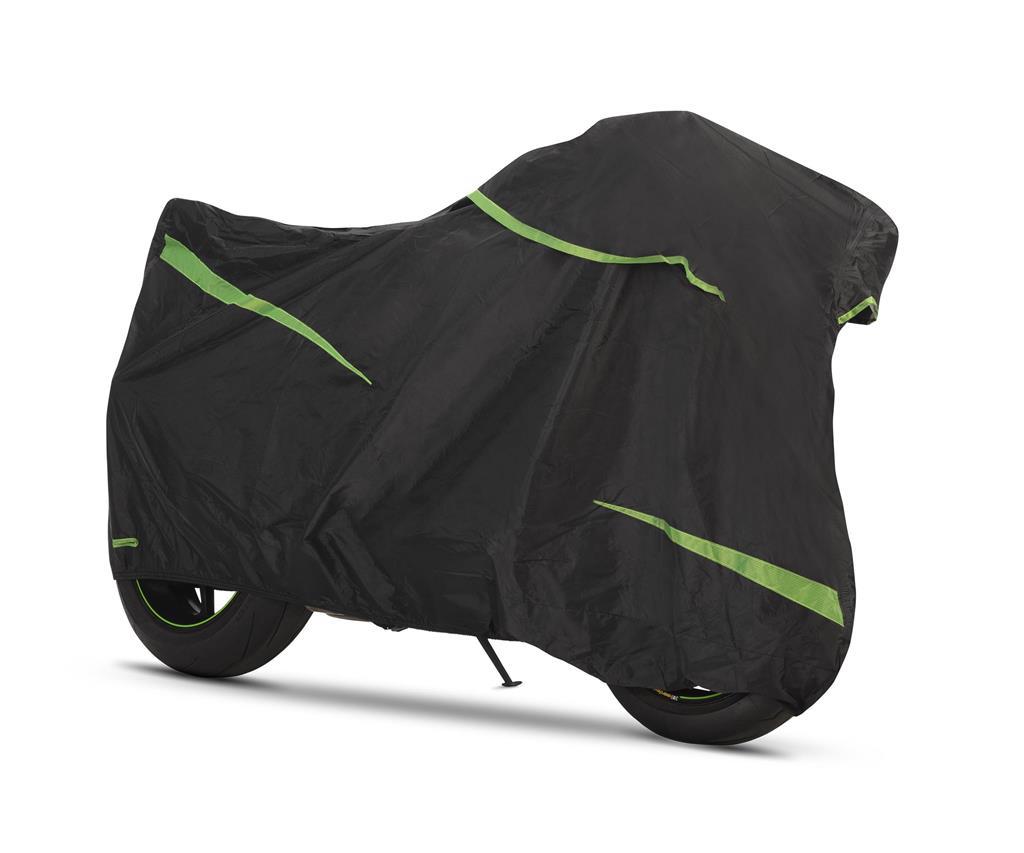
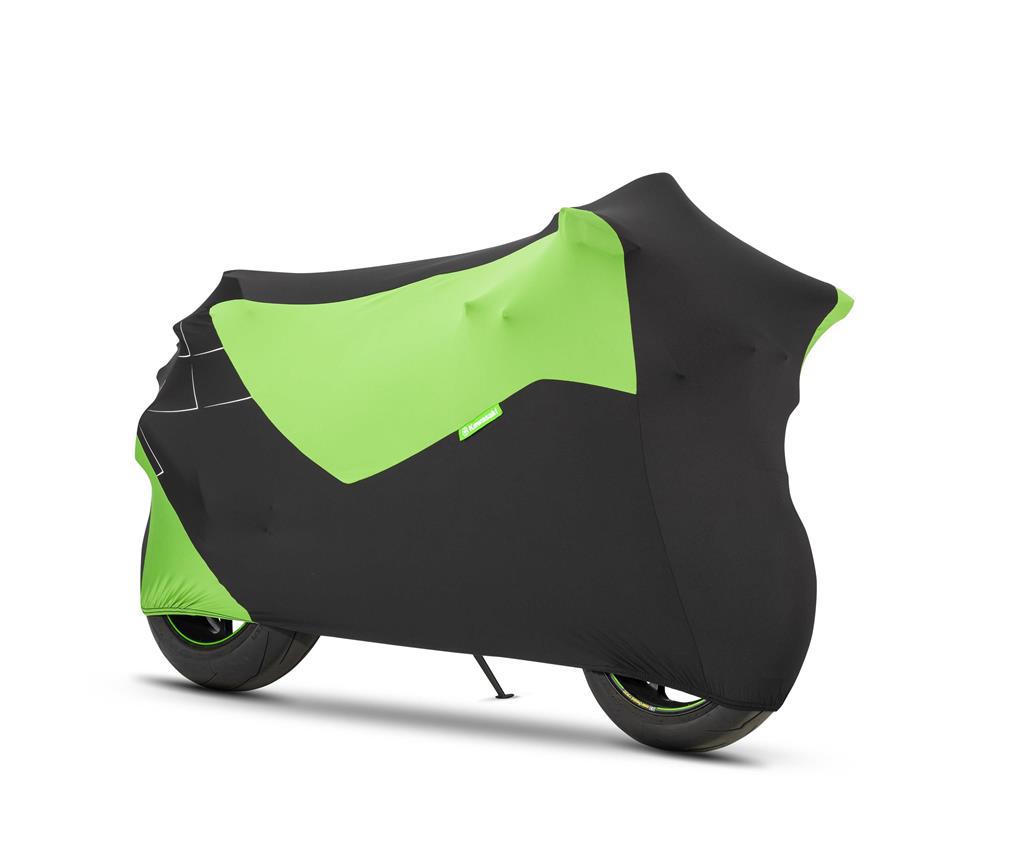
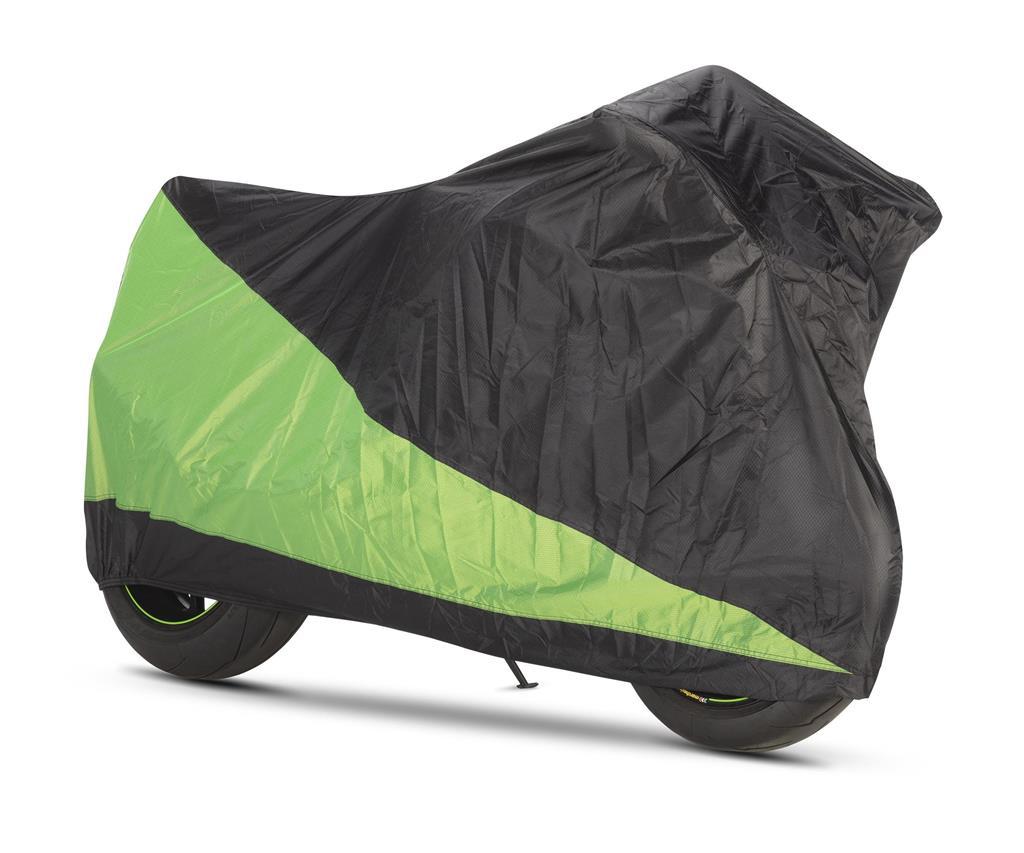
Heavy Duty Outdoor Cover - Medium
Strong durable multi layered fabric with taped seams. Heat resistant honeycomb till 120 degrees Celcius. Subtle Branding.
Two front and two rear holes for lock. Covered ventilation openings for better breathing. Window with cover to hide or show license plate.
100% Polyester. With multi usable packing backpack.
Premium Rear Paddock Stand
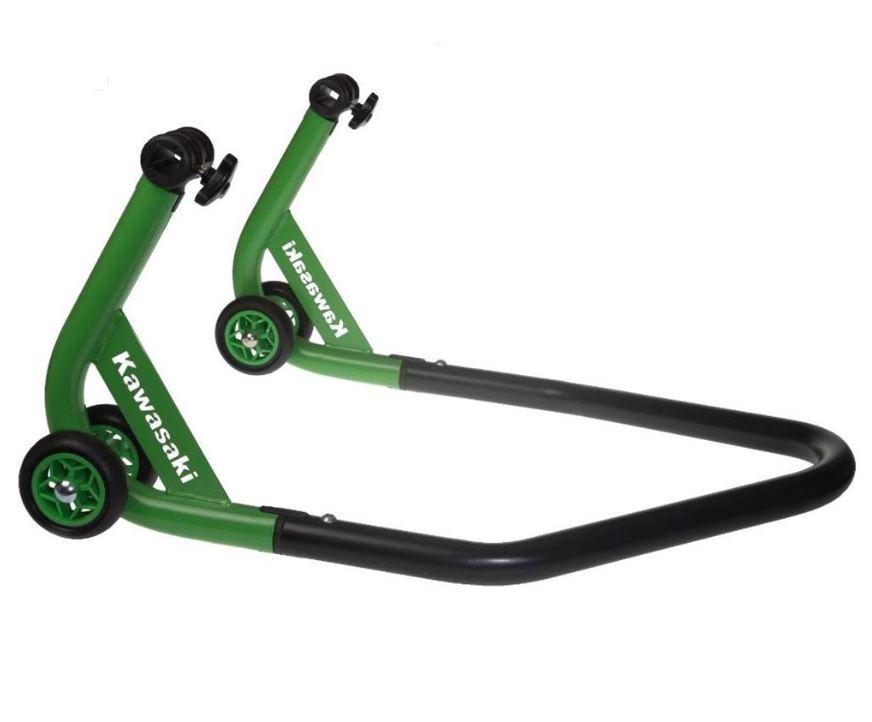
An essential tool for motorcycle enthusiasts and mechanics alike. Designed to provide stability and convenience, this paddock stand allows easy access to the wheels, suspension, and other components.
This premium rear bike stand can be disassembled, making transportation a lot easier. The compact bike stand comes in a shop worthy carrying case with a built-in carrying handle. The stand is made of premium steel and has a green and black finish. The Kawasaki logo is laser cut in steel.
Optional are the forks to suit your preference;
- The Y-forks are to be used in combination with bobbins. (163JAY0021)
- The L-forks can be used to support the rear swing arms. (163JAY0022)
Mechanics Carpet (Pit Mat), 100cm x 200cm
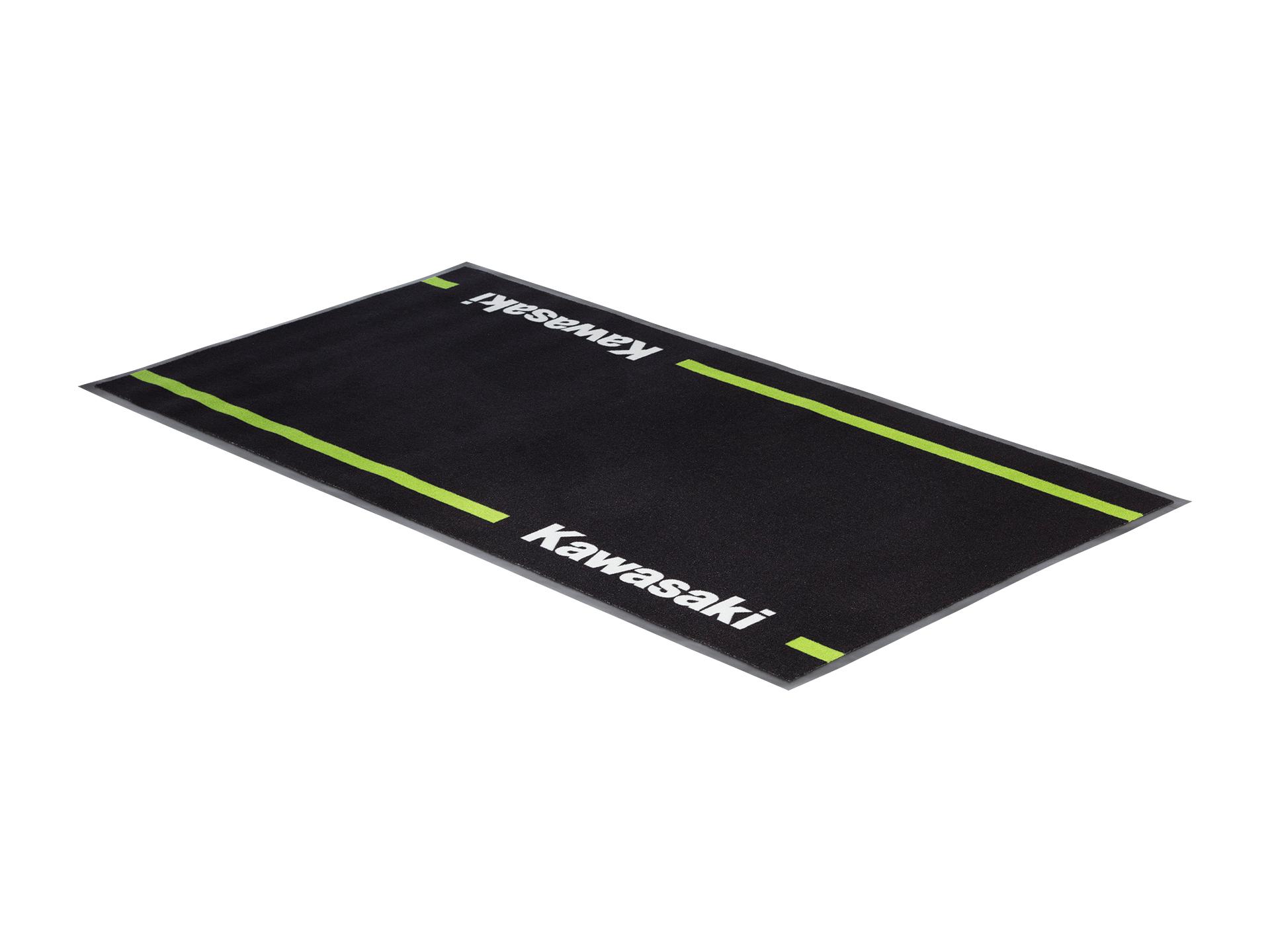
Whether you want to park your bike in a pitbox or in your garage, let your precious machine rest in style on this Kawasaki Garage Mat. The mat meets new FIM environmental codes and offers a high level of absorption and dust-control features.
- Size 100cm x 200cm
- Pile weight ± 300 gr/m²,
- Total height ± 5 mm,
- 30°C washable (no tumble-dry)
- Large Smoke Meter Cover
- USB-C Socket
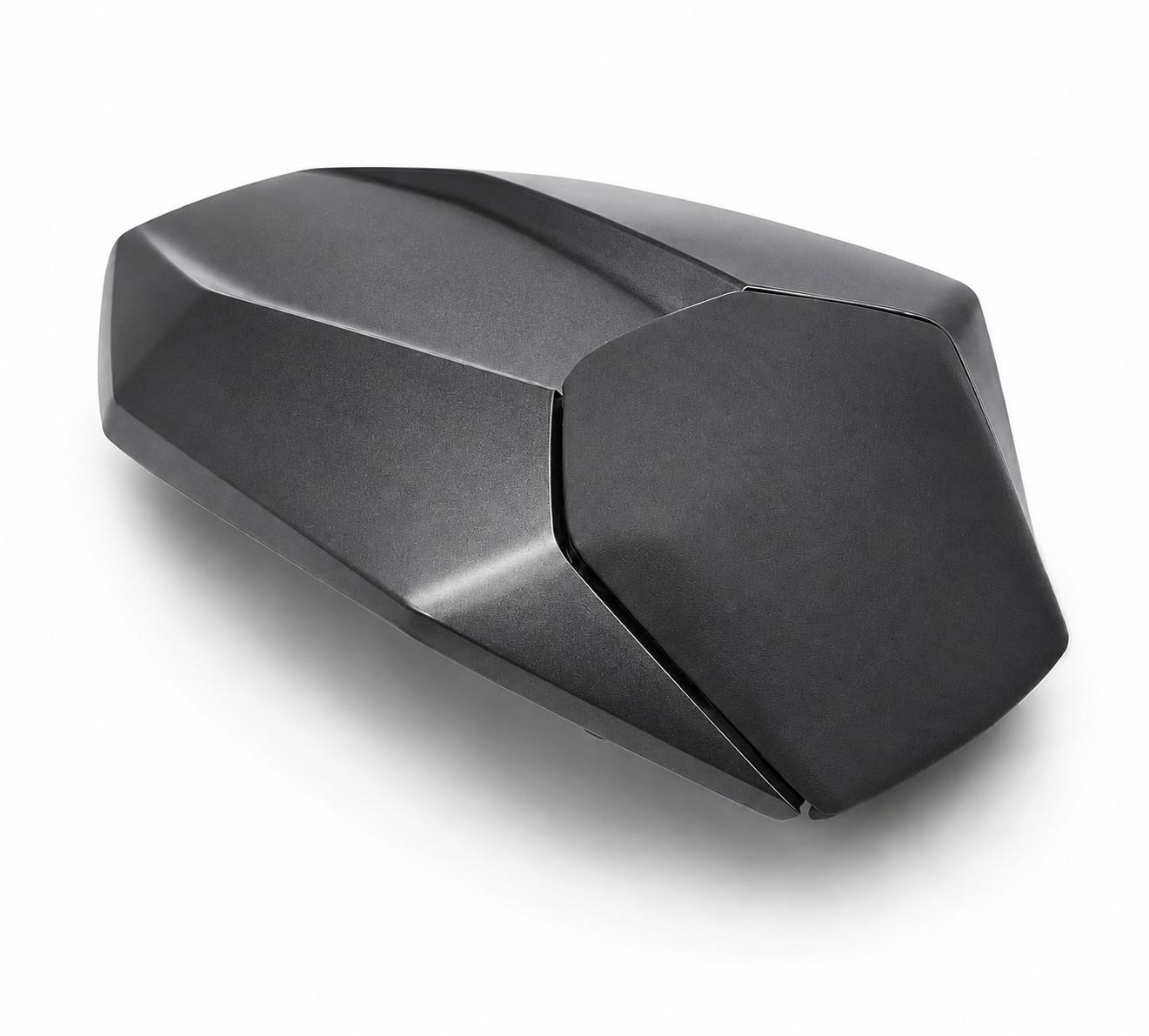
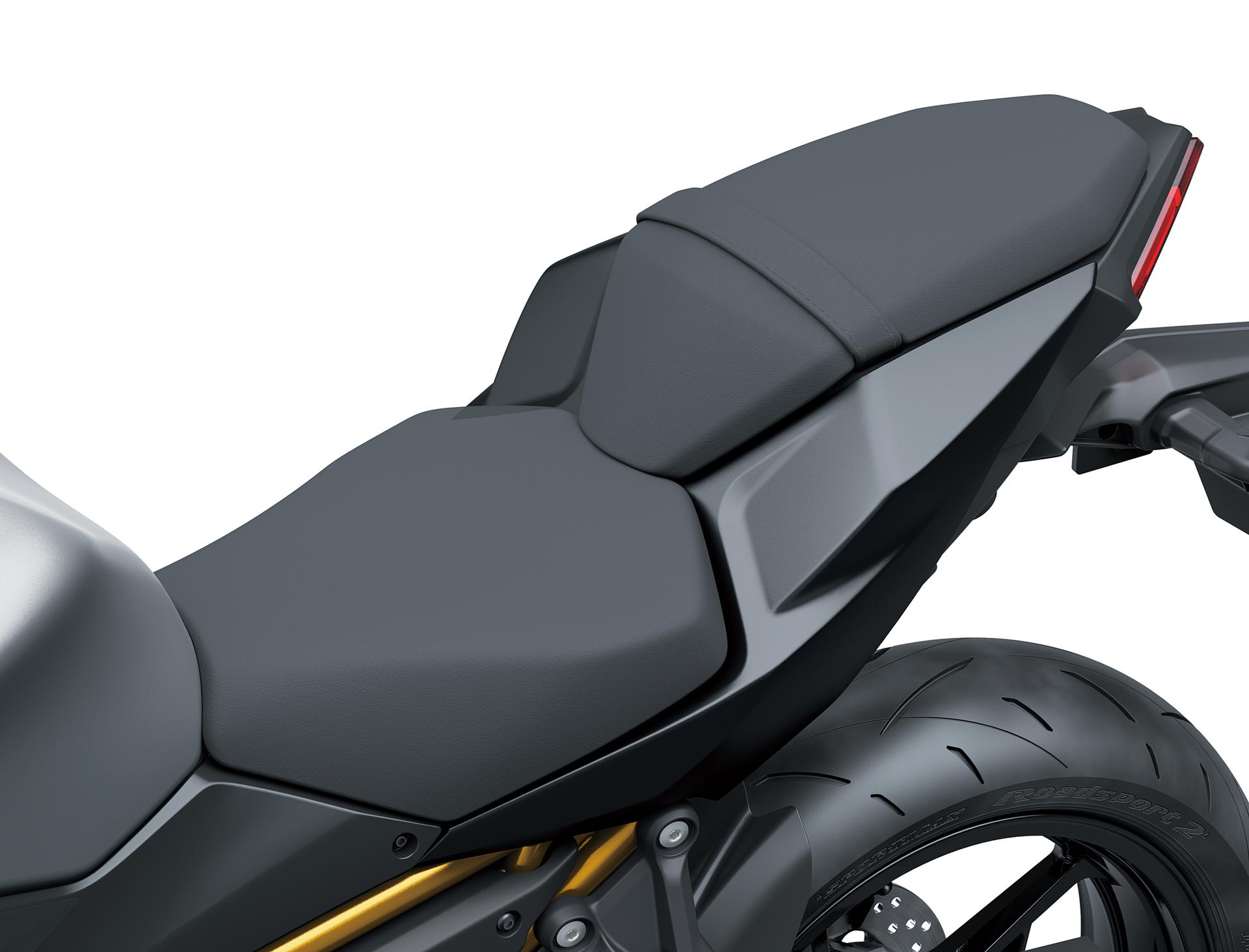
- Single Seat Cover, Metallic Carbon Grey (51A)
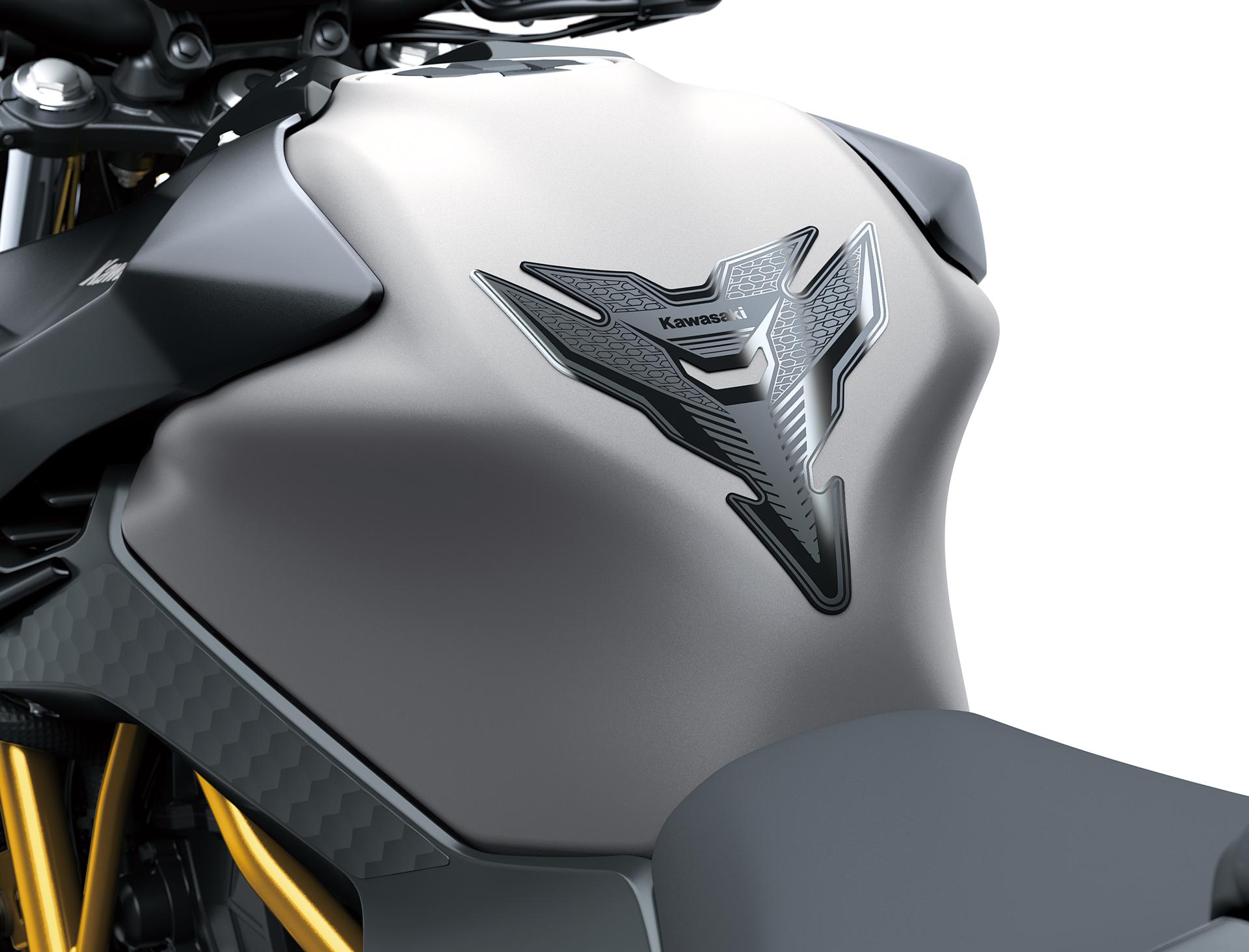
- Tank Pad
- Knee Pads
- Quick Shifter
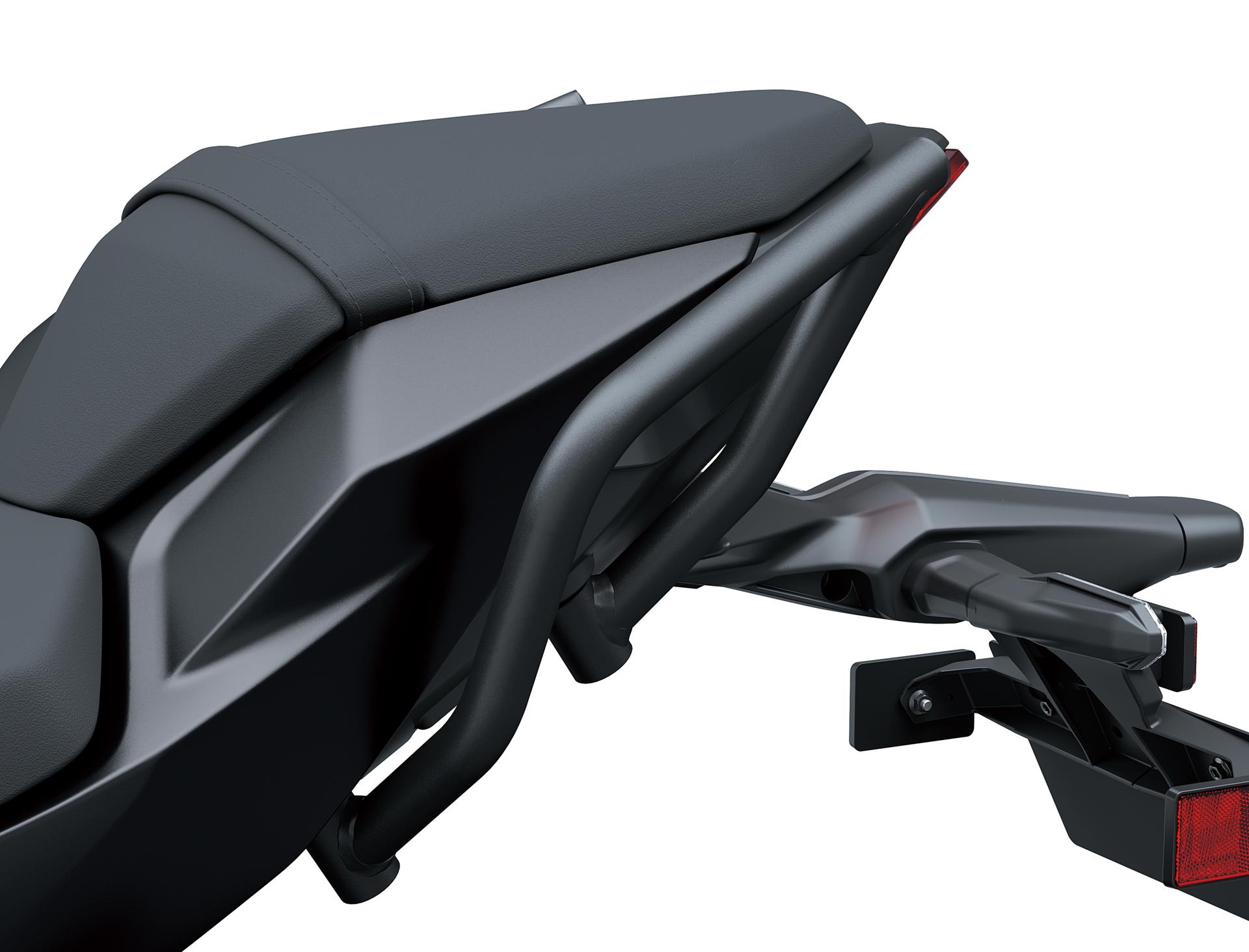
- Passenger Grab Bar
- ERGO-FIT™ Low Rider Seat (-20mm)
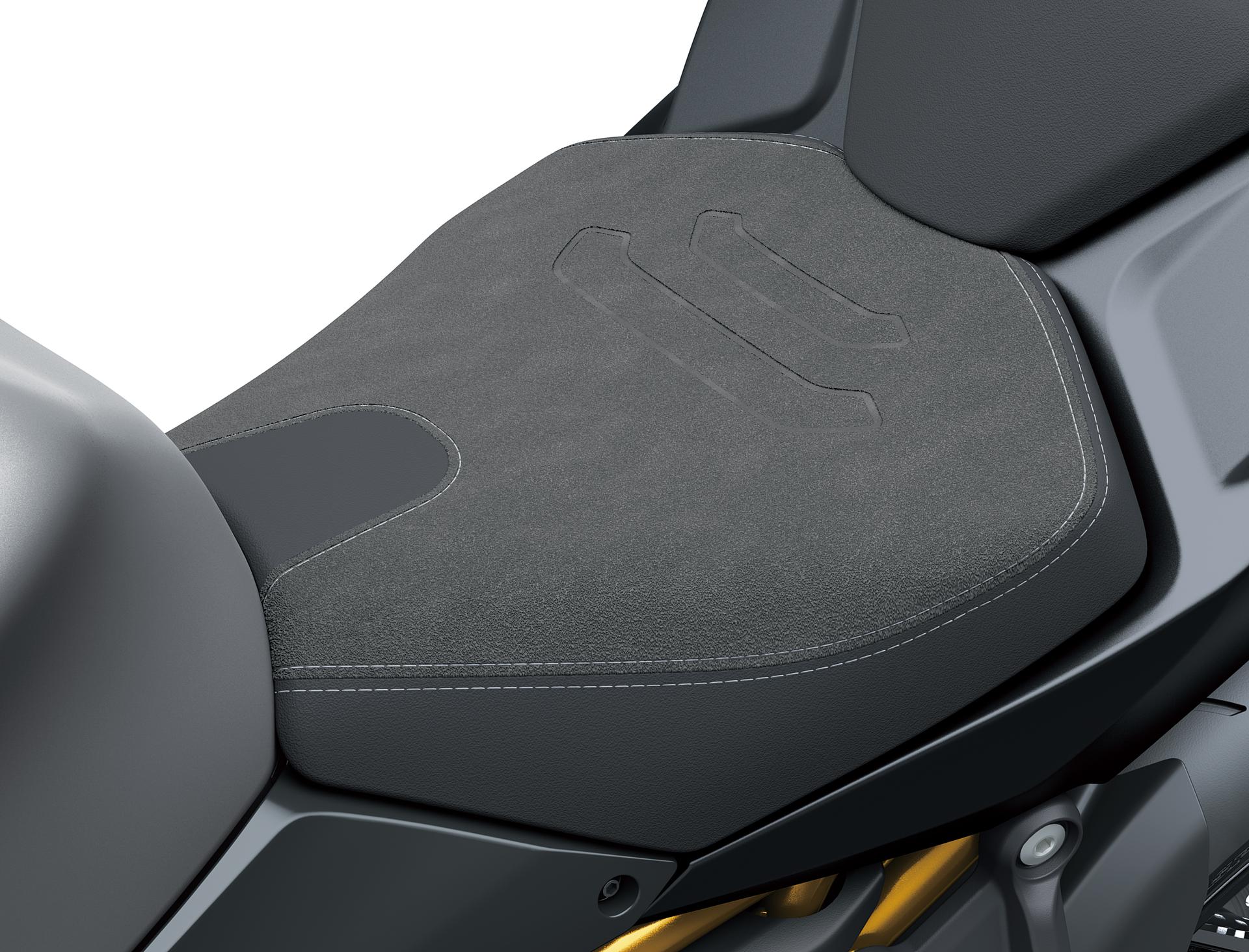
- SE Design Rider Seat
- Akrapovič Titanium Full System (Euro 5+)
- Tank Bag Bracket
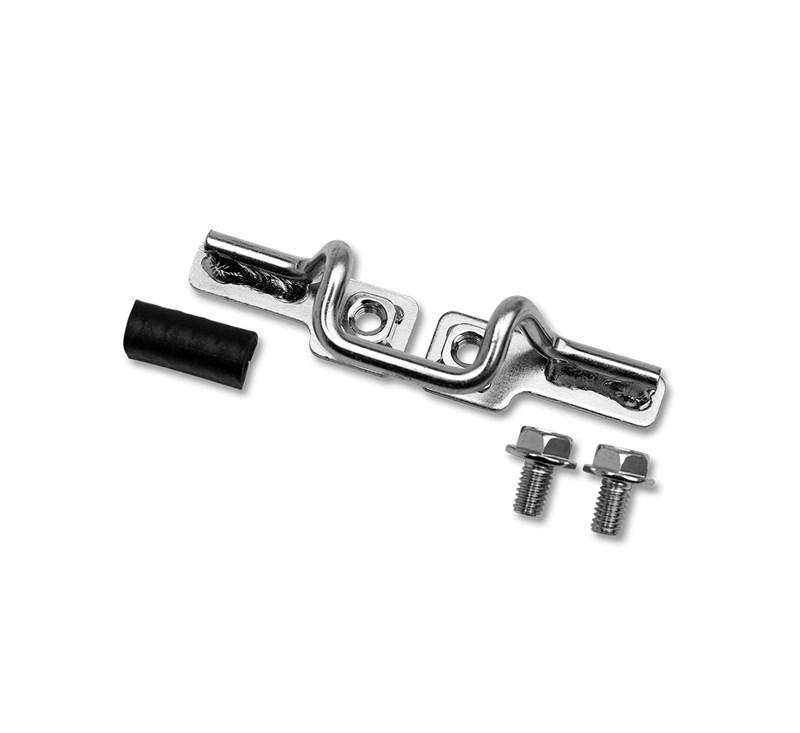
- Top Case (30L) Bracket
- Top Case Kit (30L)
- Wheel Rim Tape Set Gold/Black
- L-forks for Premium Rear Bike Stand
- Top Case (30L) Incl. Baseplate.
- SRA U-Lock, 210 mm
- Underseat Bracket for U-Lock
- Semi Soft Panniers (2 x 14L)
- Y-forks for Premium Rear Paddock Stand
- Backrest pad for topcase (30L)
- Dashboard Screen Protector
- Indoor Cover - Medium
- Wheel Rim Tape Set, Red
- Tank Bag (4L) with Window
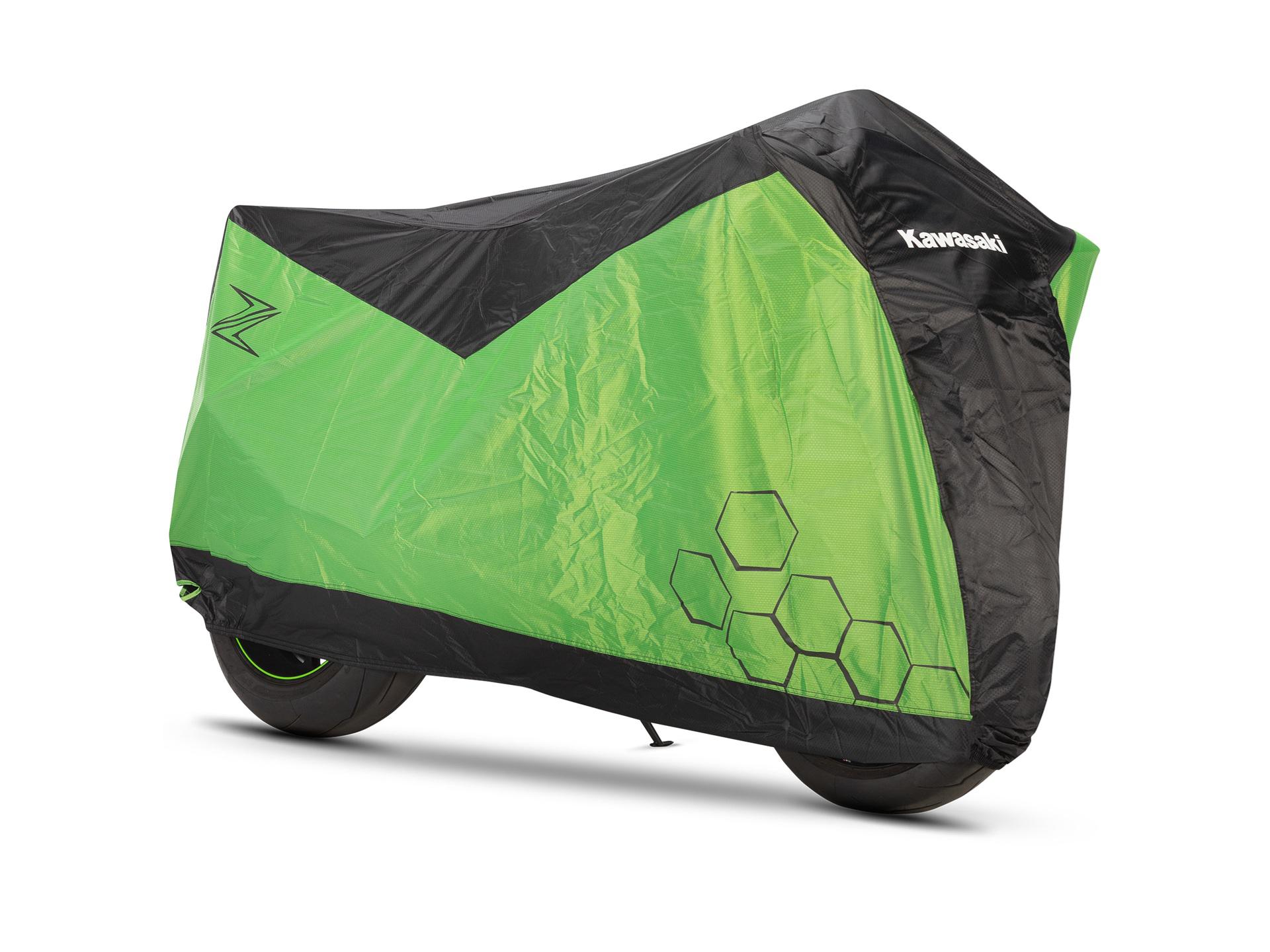
- Z Outdoor Cover
- Phone Mount Kit SP Connect+
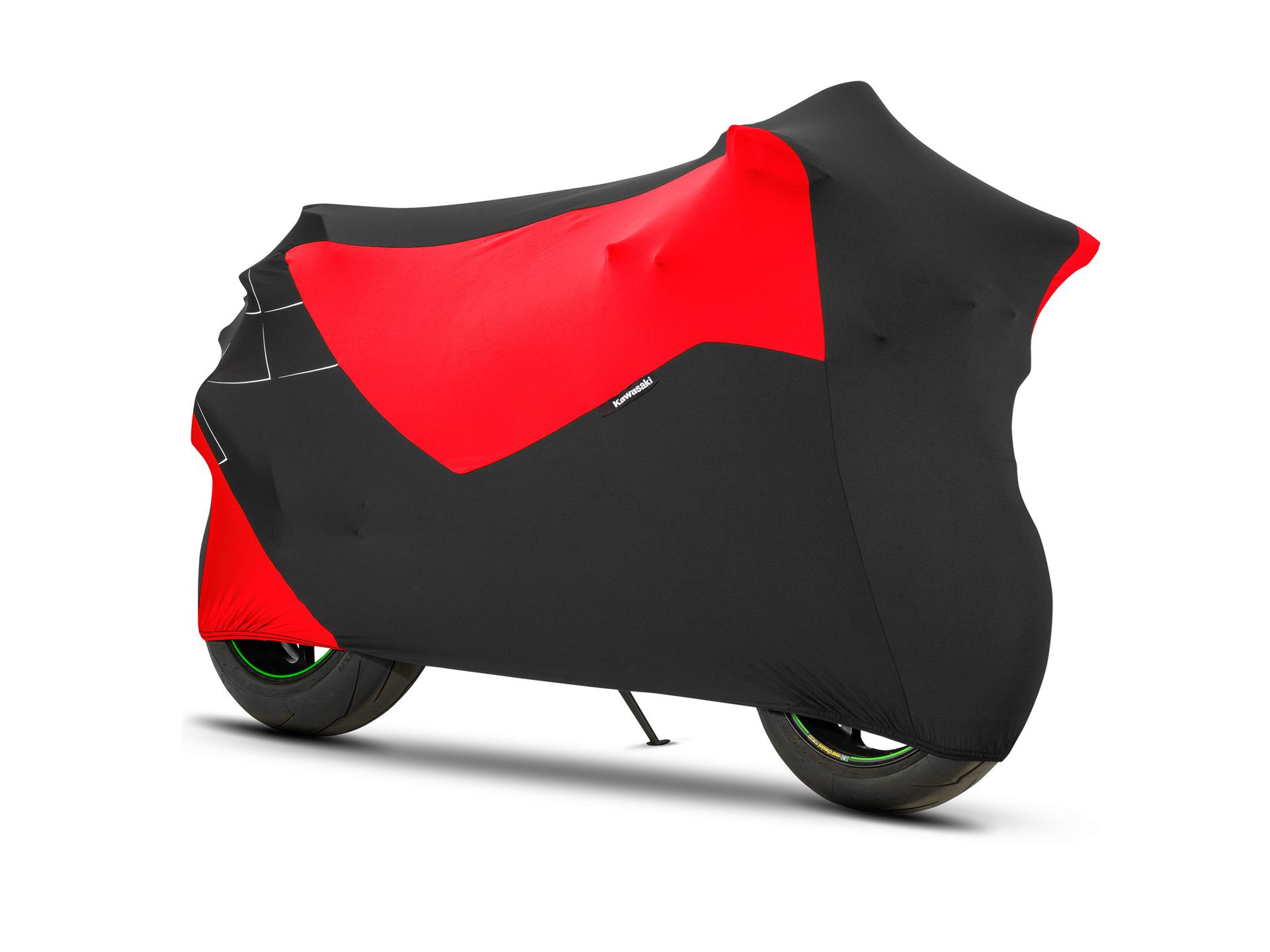
- Super Stretch Cover, Red / Black
- Heavy Duty Outdoor Cover - Medium
- Super Stretch Cover, Green / Black
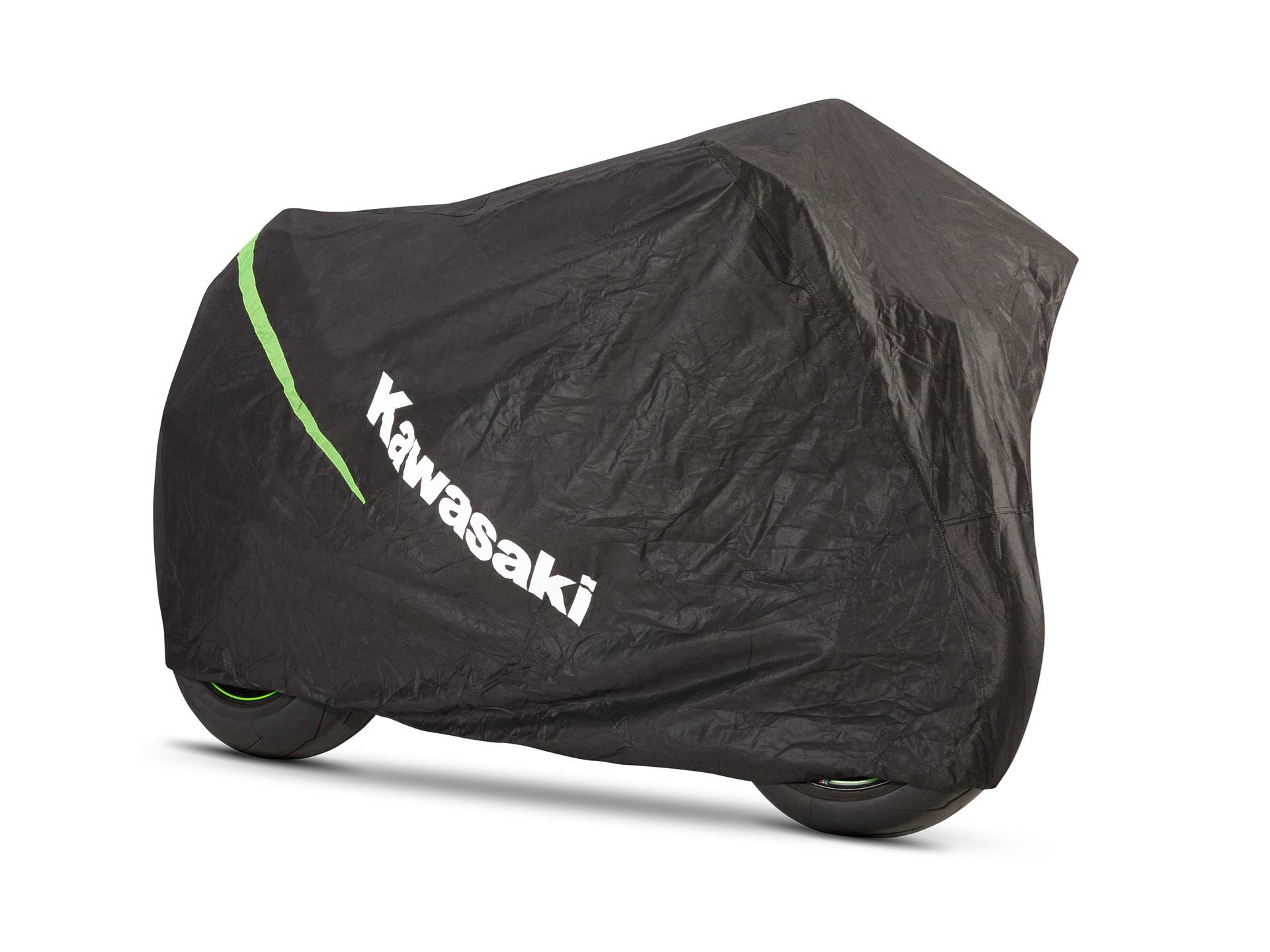
- Outdoor Cover - Medium
- Premium Rear Paddock Stand
- Mechanics Carpet (Pit Mat), 100cm x 200cm